
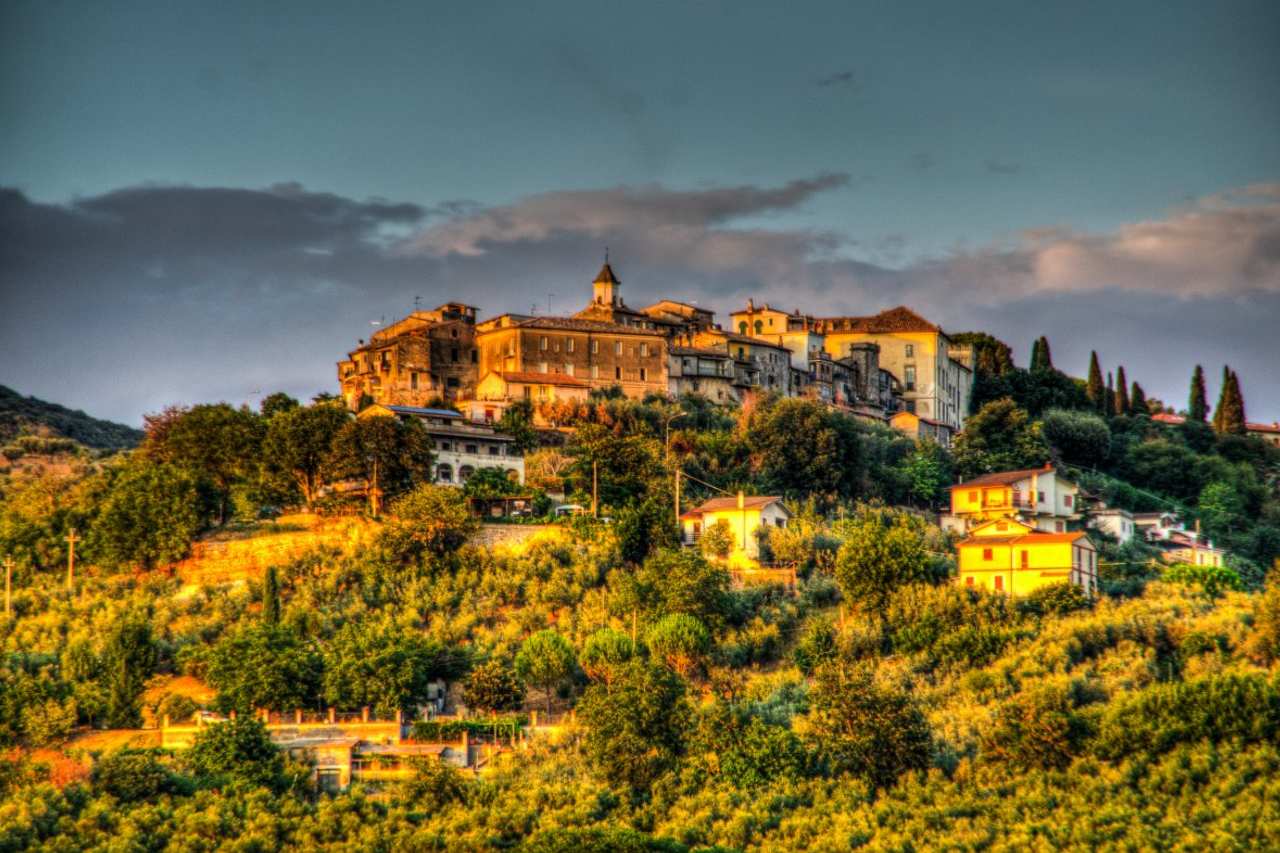
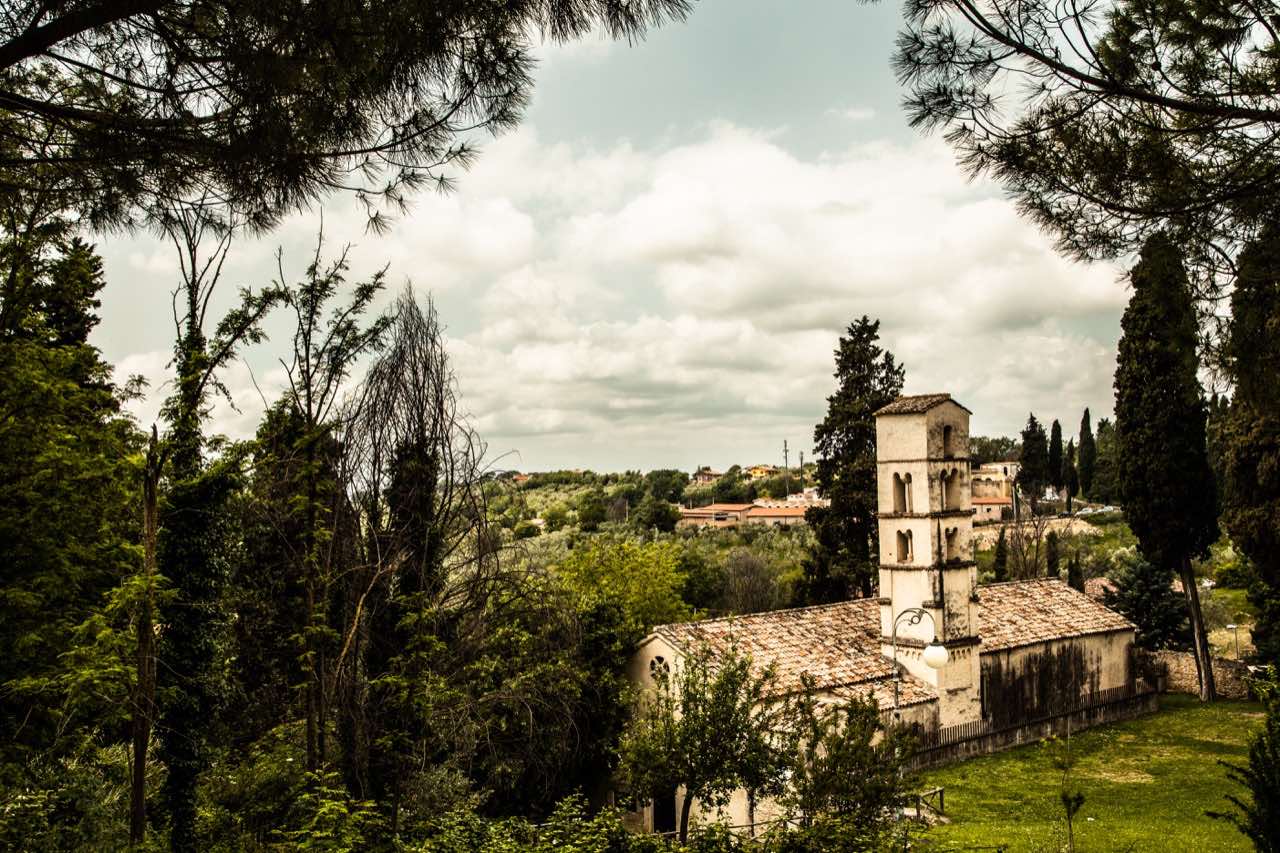
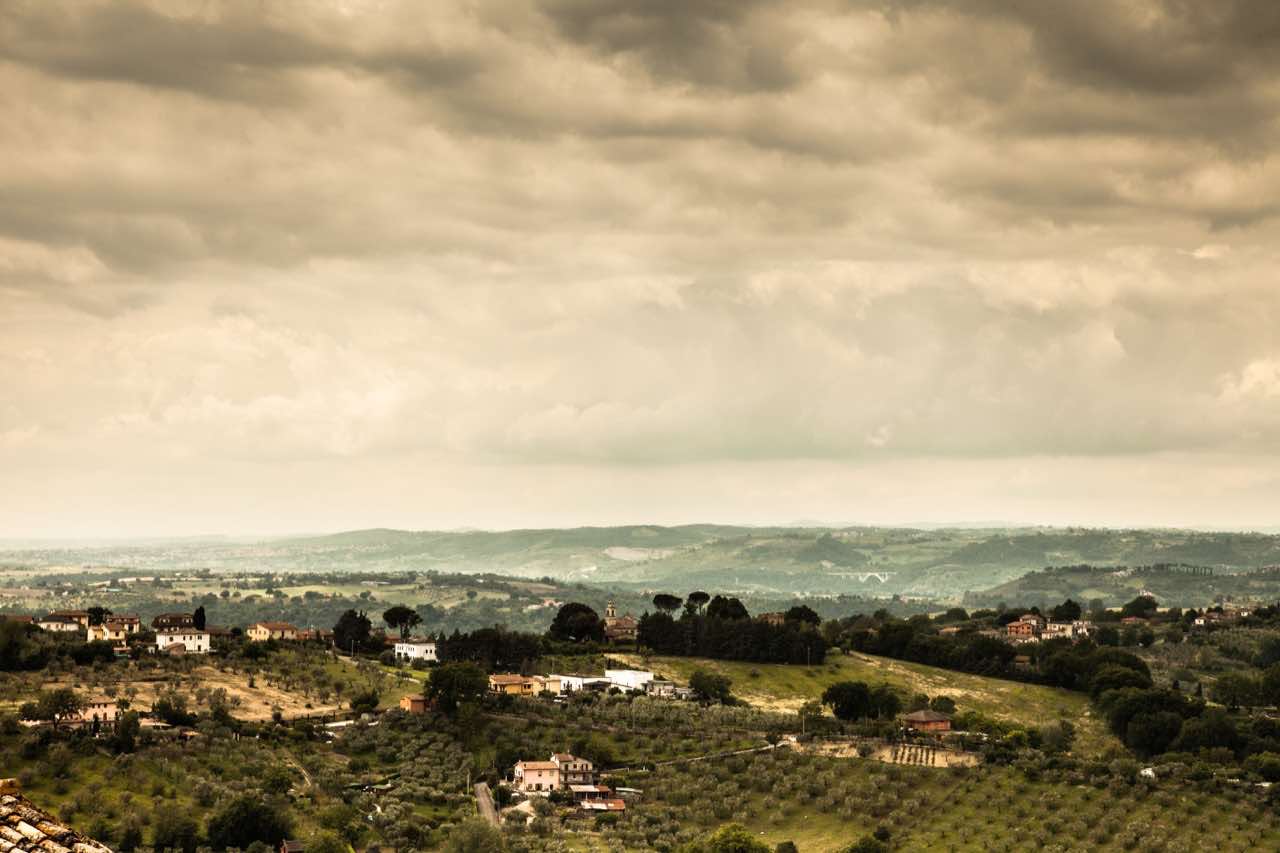


Castel San Pietro è un piccolo borgo panoramico , tradizioni locali lo vogliono sorto sui resti di una villa romana attribuita a Diocleziano. La presenza di blocchi calcarei tipicamente romani e la fontana ancora funzionante nei sotterranei del Palazzo Baronale, fanno ritenere valida l’ipotesi che tutta l’area era occupata da un’ imponente villa patrizia. Successivamente Castel San Pietro divenne possesso della Chiesa di Roma, e nel 1449 il Vaticano ne effettuò la vendita alla famiglia Orsini. Vari passaggi di proprietà ad altre nobili casate, fino al 1706, quando Clemente XI autorizzò la vendita a ulteriori terzi per conto di Simone Bonaccorsi. L’attuale palazzo che oggi ne prende il nome è di forme cinquecentesche, ma con rimaneggiamenti di varie epoche. Sul fondo di Piazza Grande inizia il parco del castello, all’interno sorge un monumentale albero di tasso, cui viene attribuita un’età di 500 anni. Da vedere la chiesa di San Pietro ,poi dedicata alla Vergine della Pietà. Nell’altare maggiore la pala dell’altare è una tela sei-settecentesca raffigurante una deposizione. La scritta “Altare privilegiatum” avverte che a questo altare sono concesse particolari indulgenze. L’unica struttura rimasta integra della cinta muraria è la Porta Romana che si apre alla base di un torrione, sec. XIII e XIV. Nei dintorni di Castel San Pietro, troviamo la piccola chiesa rurale di San Sebastiano. Sorge su ruderi romani di cui resta ben poco, risale all’incirca all’XI sec., e per secoli fu officiata da un monaco eremita. Interessante, lungo la strada che porta a S. Sebastiano, una struttura in pietra e in legno di un vecchio lavatoio del 1893.
Castel San Pietro is a small scenic village, traditionally reported as built on the ruins of a Roman villa attributed to Diocletian. The presence of typical Roman limestone blocks and a still functioning fountain in the basement of the Baronial Palace suggests the hypothesis that the entire area was occupied by a grand patrician villa. Castel San Pietro became possession of the Church of Rome, and in 1449 the Vatican effected the sale to the Orsini family. It was ruled by various owners of other noble families, until 1706, when Clement XI authorized the sale to further third parties on behalf of Simone Bonaccorsi. At the bottom of Piazza Grande (Great Square) begins the castle park, located inside a monumental yew tree 500 years old and the St. Peter's church, then dedicated to the Virgin of Mercy. The altarpiece in the main altar is a painting depicting a seventeenth and eighteenth century deposition. The word "Altar privilegiatum" (favorite altar) warns that this altar is granted special indulgences. The only integral remain of the city wall is the Porta Romana (Roman Door) which opens at the base of a tower, thirteenth and fourteenth century. Near Castel San Pietro, we find the small rural church of St. Sebastian, rising on Roman ruins dated eleventh century and officiated by a hermit for centuries. Of interest, along the road to St. Sebastian, a stone and wood structure of an old wash house (1893).

112 Numero Unico Europeo
Casa della Salute
Magliano Sabina, vocabolo Filoni 1
Tel. 0744.912224
Casperia, via Garibaldi 11
0765.639003
Castelnuovo di Farfa, via Santa Maria
0765.320002 – 0765.36031
Collevecchio, via Generale E. Pezzi 46
0765.579005
Configni, via della Fontana 2
0746.672226
Cottanello, via Fontecerro
0746.66118
Poggio Mirteto, s.p. 48 via Finocchieto
0765.338500
Stimigliano, via Neghelli 29
0765.576037
Torri in Sabina, corso Foronovo 82
0765.62001


